
Munich 1958
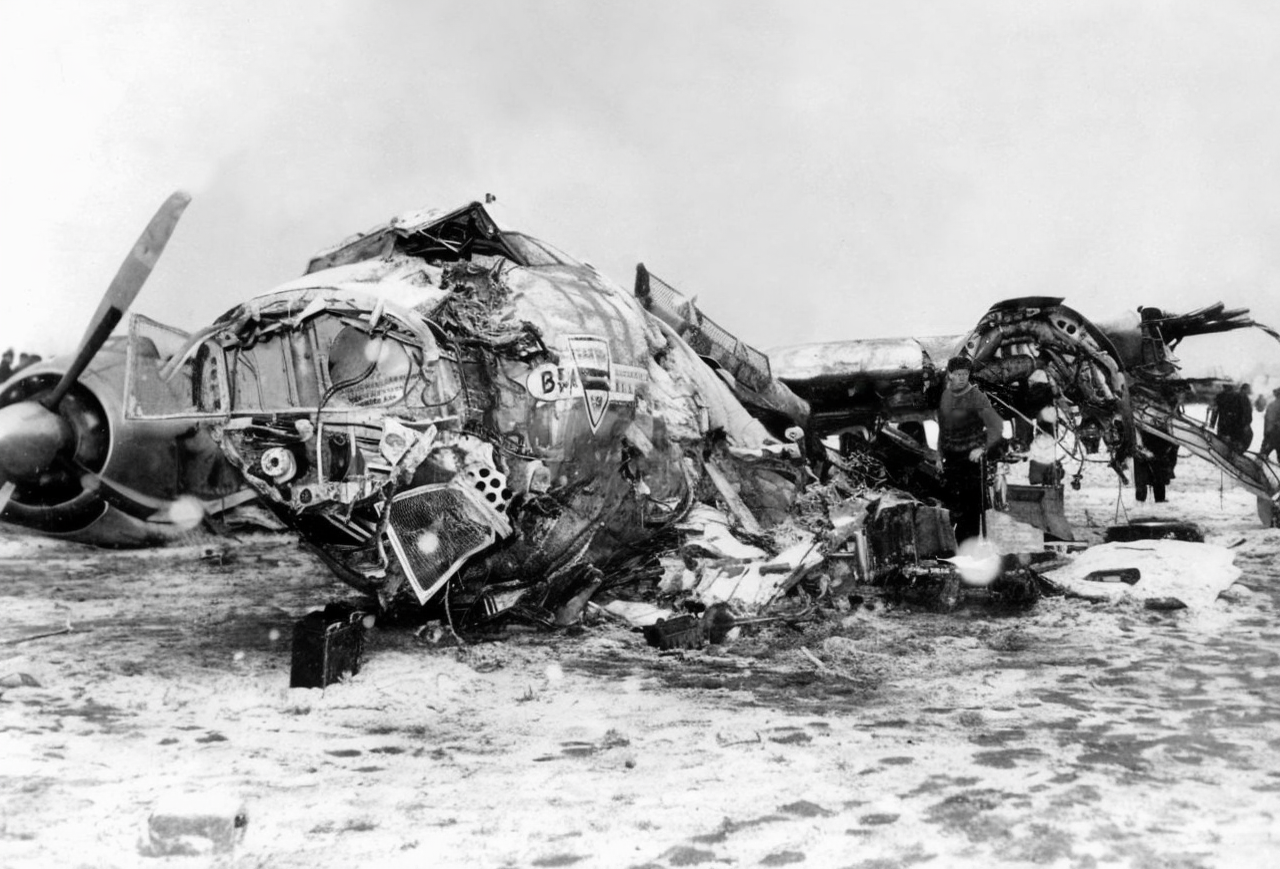
Aircraft: British European Airways Airspeed Ambassador G-ALZU | On board: 44 | Lives lost: 23
The Darkest Day
On 6 February 1958, Manchester United's celebrated young team — the Busby Babes — were travelling home from Belgrade after securing a place in the European Cup semi-finals. Their British European Airways aircraft stopped at Munich-Riem Airport to refuel. Two attempts to take off were abandoned. On the third attempt, in wintry conditions, the aircraft failed to become airborne, left the runway and crashed.
There were 44 people aboard. Twenty-three ultimately lost their lives. Among them were eight Manchester United players, three members of the club's staff, eight journalists, two crew members and two other passengers. The photograph above records the terrible aftermath: the shattered aircraft lying in the snow, an image that came to represent one of the darkest days not only in Manchester United's history, but in the history of football.
The Busby Babes
Manchester United had won the First Division title in both 1955–56 and 1956–57 under Matt Busby. Built around extraordinarily talented young players, the side became known throughout football as the Busby Babes. On the day before the crash, United drew 3–3 with Red Star Belgrade, completing a 5–4 aggregate victory and advancing to the European Cup semi-finals.
Geoff Bent, Roger Byrne, Eddie Colman, Duncan Edwards, Mark Jones, David Pegg, Tommy Taylor and Liam Whelan.
Those were the eight United players whose lives were lost. Seven died as a direct result of the crash that day. Duncan Edwards, only 21 and already regarded as one of the outstanding footballers of his generation, died in hospital 15 days later from his injuries.
More Than a Football Team
The disaster reached far beyond the playing squad. United secretary Walter Crickmer, trainer Tom Curry and coach Bert Whalley were killed. Eight journalists also died, including former Manchester City and England goalkeeper Frank Swift. Co-pilot Kenneth Rayment later died from his injuries, while cabin steward Tom Cable, travel agent Bela Miklos and Manchester United supporter and friend of Matt Busby, Willie Satinoff, were also among those lost.
Manager Matt Busby was seriously injured but survived. Goalkeeper Harry Gregg became renowned for his courage at the scene, returning to the wreckage and helping rescue fellow passengers. Among the surviving United players were Bobby Charlton and Bill Foulkes, men who would become central to the club's extraordinary recovery.
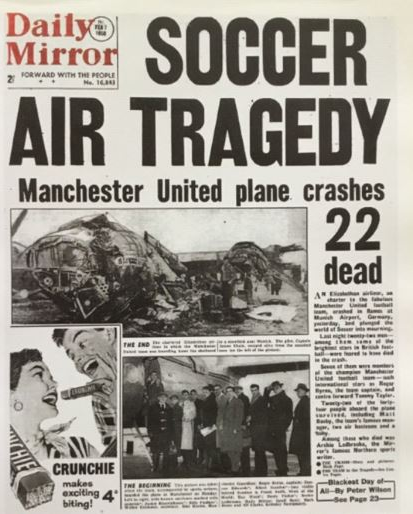
From Munich to European Champions
Manchester United somehow continued the 1957–58 season. Assistant manager Jimmy Murphy, who had not travelled to Belgrade because he was managing Wales, took charge while Busby recovered. Less than two weeks after the crash, United returned to Old Trafford to play Sheffield Wednesday in the FA Cup. They went on to reach that season's FA Cup Final.
Busby eventually rebuilt his team. Ten years after Munich, Manchester United defeated Benfica at Wembley to win the 1968 European Cup. Bobby Charlton and Bill Foulkes, both survivors of Munich, were members of the side. For the club, that triumph could never erase the tragedy, but it became an enduring part of the story of recovery that followed it.